Graphene in Concrete: technology for stronger and more durable concrete.
Graphene is an advanced nanomaterial capable of modifying the microstructure of cement, increasing mechanical strength, reducing cracking, and improving the durability of cementitious materials.
When dispersed correctly, graphene acts as a reinforcement on a nanoscale. The result is a denser, stronger, and more durable cementitious matrix.
The challenges of traditional concrete
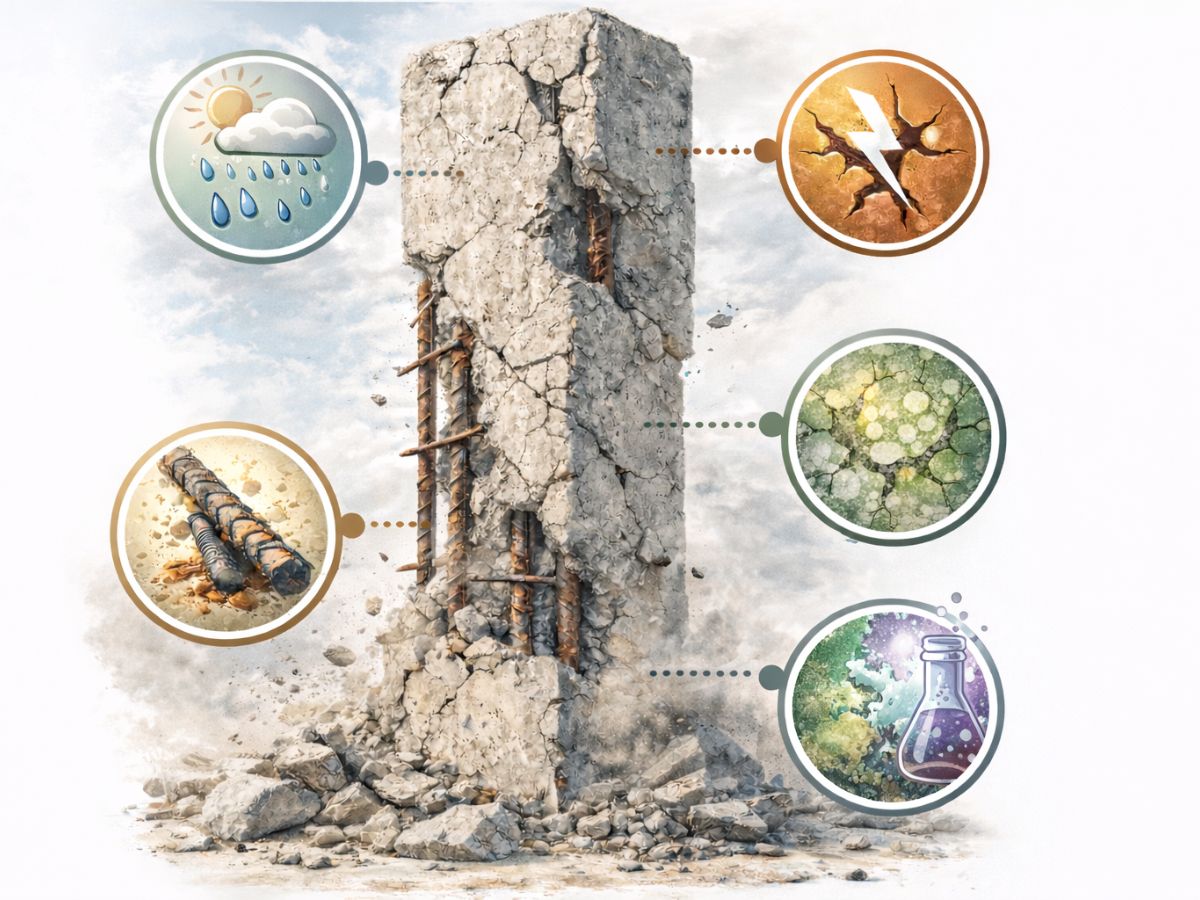
Concrete is the most widely used building material in the world, present in virtually all infrastructure and building projects. Despite its enormous importance, it has structural limitations that can compromise the performance and durability of structures over time. Among the main challenges of conventional concrete are low tensile strength, the formation of microcracks, and degradation caused by environmental factors. These problems can reduce the lifespan of structures and increase maintenance costs.
With advances in nanotechnology, new materials are being studied to improve the performance of concrete. Among them, graphene emerges as one of the most promising nanomaterials for modifying the microstructure of cementitious materials.Research in this area is also being developed in partnership with universities and research centers. SuperGrafeno maintains a collaboration with the Federal University of Santa Catarina (UFSC), including initiatives with the UFSC Structures Laboratory, focused on the study of advanced cementitious materials and the development of applications with graphene.
Main pathologies of concrete
🧱 Microcracks
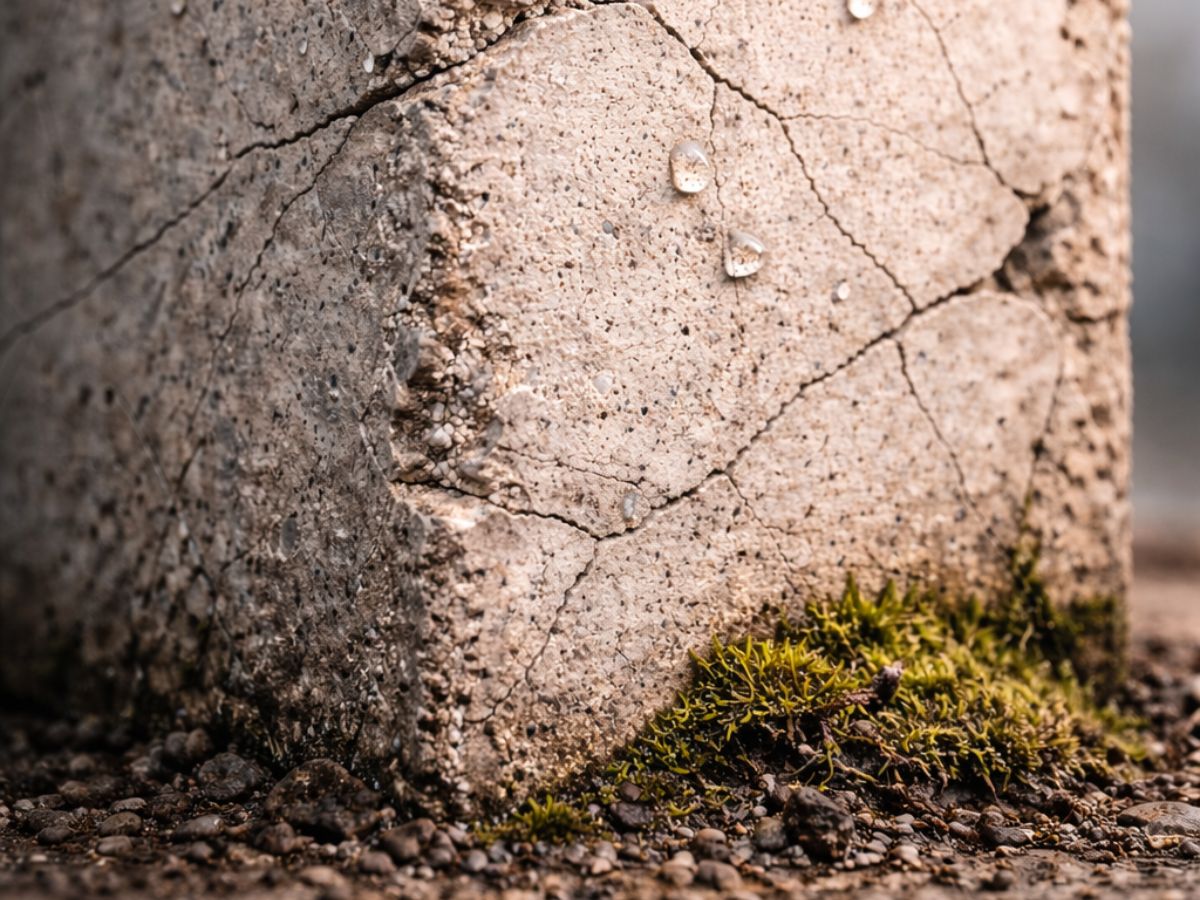
Microcracks appear in the cementitious matrix due to shrinkage, internal stresses, and thermal variations, and can evolve into structural failures over time.

⚙ Low tensile strength
Despite its high compressive strength, concrete has low tensile strength, making it susceptible to cracking and structural failures without adequate reinforcement.

🌧 Environmental degradation
Despite its high compressive strength, concrete has low tensile strength, making it susceptible to cracking and structural failures without adequate reinforcement.

How graphene improves concrete performance
The Future of Concrete Begins at the Nanoscale
Graphene is considered one of the strongest materials ever discovered by science and is now redefining cementitious materials engineering. When incorporated into the cement matrix through proper dispersion, graphene interacts with hydration products, promoting a significantly denser, more homogeneous, and mechanically efficient microstructure.
The result is concrete with superior structural performance.
- Significant reduction in microcrack nucleation and propagation.
- Improved transfer and redistribution of internal stresses
- Increased mechanical strength, both in compression and tension.
- Formation of a physical barrier that hinders the penetration of water, chlorides, and aggressive chemical agents.
In practice, this translates into more durable structures, with less need for maintenance and a significantly extended lifespan. It's not just about concrete. This is advanced engineering applied at the nanoscale.
Microstructure refinement
Reduction of porosity and formation of a more compact and efficient cementitious matrix.
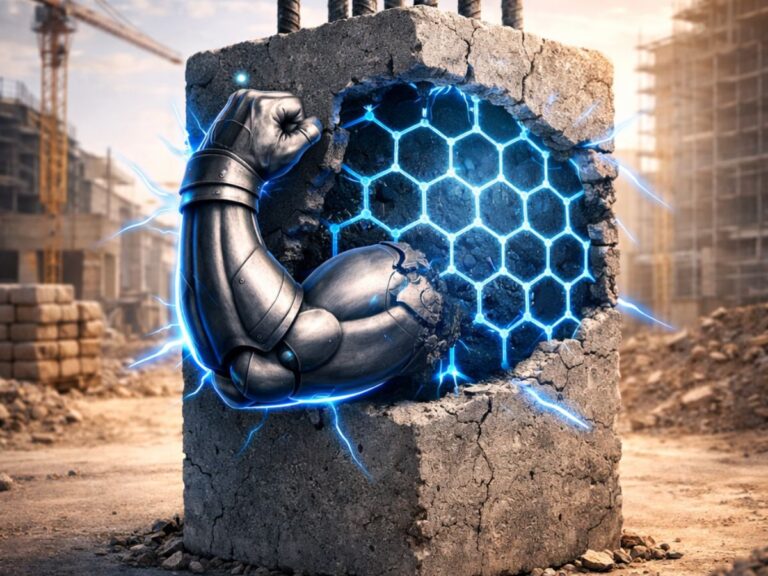
Greater structural strength
Improved mechanical performance of concrete, with gains in compression and tension.
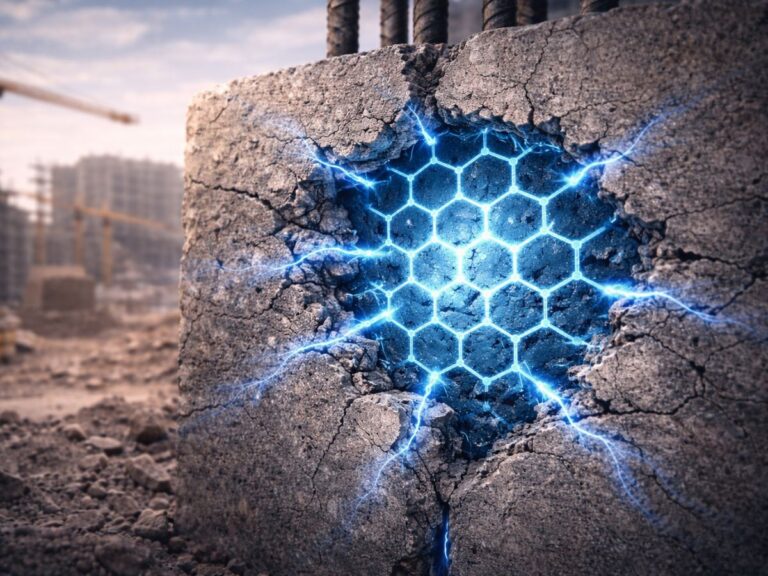
Crack control
Reduction in the nucleation and propagation of microcracks throughout the service life.

Protection against aggressive agents
A physical barrier that reduces the penetration of water, chlorides, and chemical contaminants.
Advanced functional properties of concrete with graphene.
In addition to mechanical and structural benefits, the incorporation of graphene can give concrete advanced functional properties, enhancing its performance in specific engineering applications.
Accelerating cement hydration
The presence of graphene can act as a nucleation site, favoring the formation of hydration products and contributing to the faster development of initial strength.
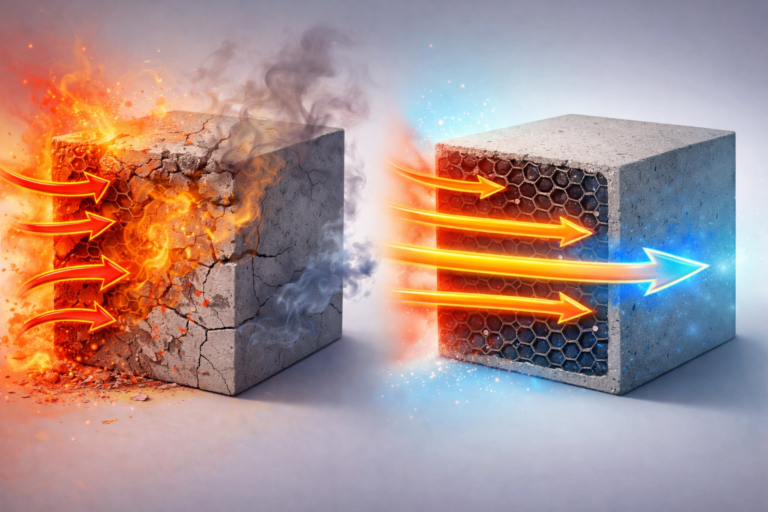
Improved thermal conductivity
Graphene can increase the thermal conductivity of concrete, facilitating heat dissipation and reducing internal thermal gradients.
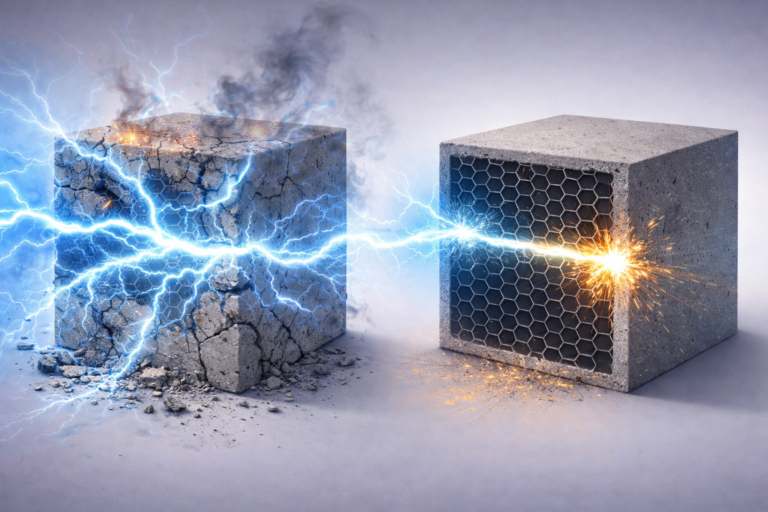
Functional electrical properties
The addition of graphene can give concrete conductive properties, enabling applications such as structural monitoring, resistive heating, and smart systems.
Increased structural durability
Reducing permeability and improving microstructure contribute to greater resistance to aggressive agents, extending the lifespan of structures.
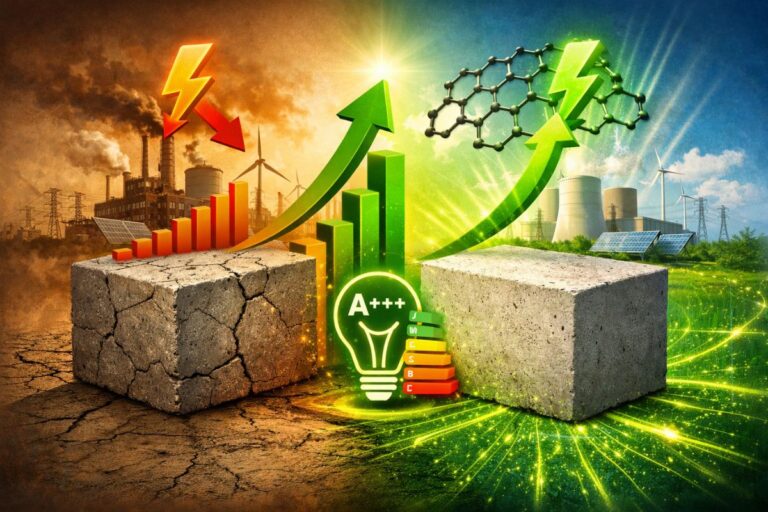
Energy efficiency
The combination of thermal and structural properties can contribute to greater energy efficiency in buildings, reducing losses and optimizing overall thermal performance.

Ease of use
The incorporation of graphene can be achieved without significant changes to conventional processes, allowing for practical application in construction and easy adoption of the technology.
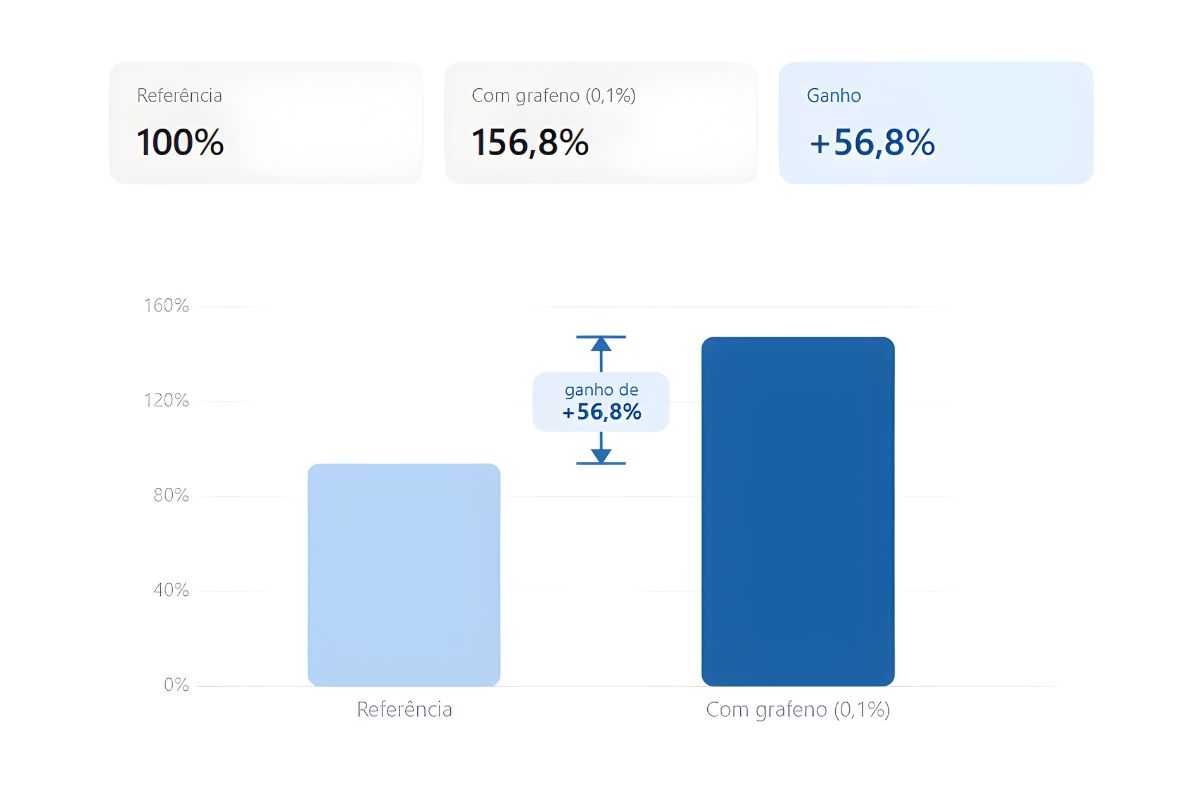
Experimental results of graphene in cementitious materials
Laboratory data show how incorporating graphene oxide can improve mechanical strength, refine microstructure, and reduce porosity in the cementitious matrix.
What the results show in practice
Experimental tests on cement pastes with graphene oxide indicate that small additions of the nanomaterial can generate significant gains in material performance. Among the observed results, the following stand out: increased flexural tensile strength, reduced void ratio, and the formation of a more compact and homogeneous microstructure. These effects show that graphene acts not only as an additive but also as a modifier of the cementitious matrix on a nanometric scale.
Furthermore, the results indicate that graphene directly influences the hydration mechanisms of cement, acting as a nucleation site for the formation of hydrated products. This effect contributes to a more efficient organization of the microstructure from the earliest ages, accelerating the development of initial strength and promoting a more cohesive matrix over time. As a consequence, the material exhibits better performance not only in the hardened state but also during the initial curing phases.
Another relevant point observed is graphene's ability to act as a physical barrier on a nanometric scale, reducing pore connectivity and hindering the penetration of water, chloride ions, and other aggressive agents. This characteristic is fundamental for applications in harsh environments, where durability is a critical factor. By reducing degradation mechanisms associated with permeability, the use of graphene contributes to more stable structures with a longer lifespan and less need for maintenance over time.
Tensile Strength in Bending
Graphene Effect
Relative index (%) — reference = 100%
Graphene in Concrete: Reducing Porosity and Increasing Durability
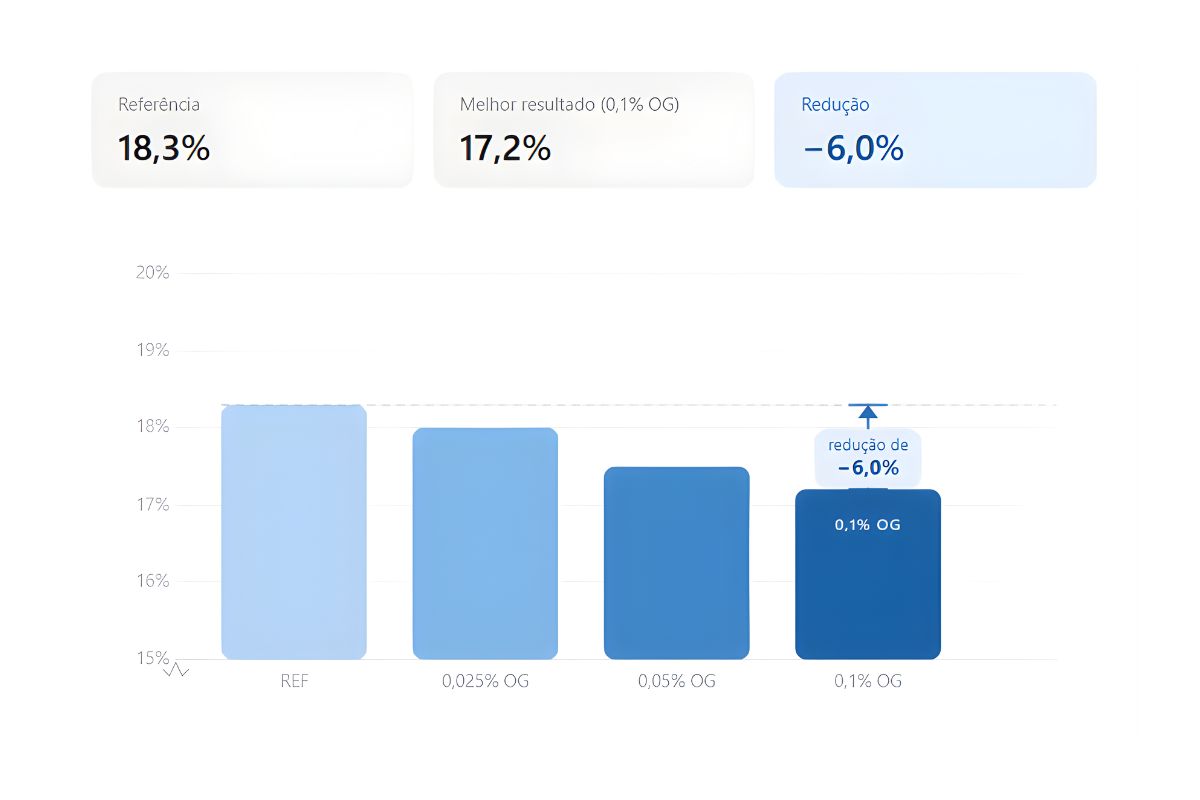
The incorporation of graphene promotes a denser cementitious matrix, reducing the void ratio and increasing resistance to penetration by aggressive agents.
Void Ratio
Effect of Graphene Oxide
Void ratio (%) by composition — lower is better
Relative index (%) — reference = 100%
Experimental results at 28 days of age.
Reduction of void ratio and densification of microstructure
Experimental tests indicate that the addition of graphene oxide It reduces the void ratio of concrete, resulting in a denser, more homogeneous, and structurally more efficient cementitious matrix. This densification is directly associated with the better distribution of cement hydration products, which become more uniformly organized, filling internal spaces and reducing discontinuities in the microstructure.
Furthermore, the graphene It acts as a microstructure refinement agent, promoting the formation of a more compact and less connected internal network. This reduction in pore connectivity is a critical factor, as it significantly limits the movement of fluids within the material. As a consequence, there is a decrease in permeability and greater resistance to the penetration of water, chloride ions, and other aggressive chemical agents.
Another relevant aspect is that this structural modification occurs on a nanometric scale, which allows for graphene It acts directly on the fundamental mechanisms of cementitious matrix formation. This effect not only reduces internal defects but also contributes to a better redistribution of stresses, increasing the integrity of the material over time.
From an engineering standpoint, these gains translate into more durable concrete, with better performance in harsh environments and less susceptibility to degradation processes. Structures exposed to moisture, thermal cycles, chemical agents, or marine environments tend to benefit directly from this reduction in internal porosity.
In practice, this means less water infiltration, a reduction in pathologies such as cracking induced by external agents, a longer lifespan for structures, and a significant decrease in maintenance costs over time. It represents not only an incremental improvement, but a structural one in the behavior of the concrete.
In practice, this means more durable structures, with less incidence of leaks and lower maintenance costs over their lifespan.
Importance of Graphene Dispersion in Concrete
The performance of graphene in cementitious materials depends directly on its dispersion within the matrix. A homogeneous distribution is essential to achieve real gains in strength, durability, and structural performance.
Efficient dispersion: a critical factor for graphene performance.
Experimental studies indicate that the performance of graphene in cementitious materials is directly associated with the quality of its dispersion in the matrix. When homogeneously distributed, the nanomaterial interacts more efficiently with the hydration products of the cement, favoring the formation of a more uniform microstructure with better mechanical properties.
Conversely, inadequate dispersion tends to generate agglomerates, which act as regions of discontinuity within the cementitious matrix. These zones can compromise the expected gains and, in certain cases, even impair the mechanical behavior of the concrete.
Efficient dispersion allows graphene to act in a distributed manner throughout the matrix, contributing to the control of microcrack nucleation and propagation, as well as helping to reduce internal porosity. In this way, the effects of the nanomaterial are exploited more consistently.
From an engineering perspective, it is clear that graphene's performance is not only related to its presence in the system, but mainly to how it is incorporated. Appropriate dispersion methods are essential to ensure repeatability of results and viability on an industrial scale.
Therefore, the development of graphene-based solutions must consider not only the characteristics of the material, but also the mixing and application processes, ensuring effective performance under real-world conditions.
This behavior demonstrates that proper graphene dispersion is crucial for achieving real gains in structural performance.
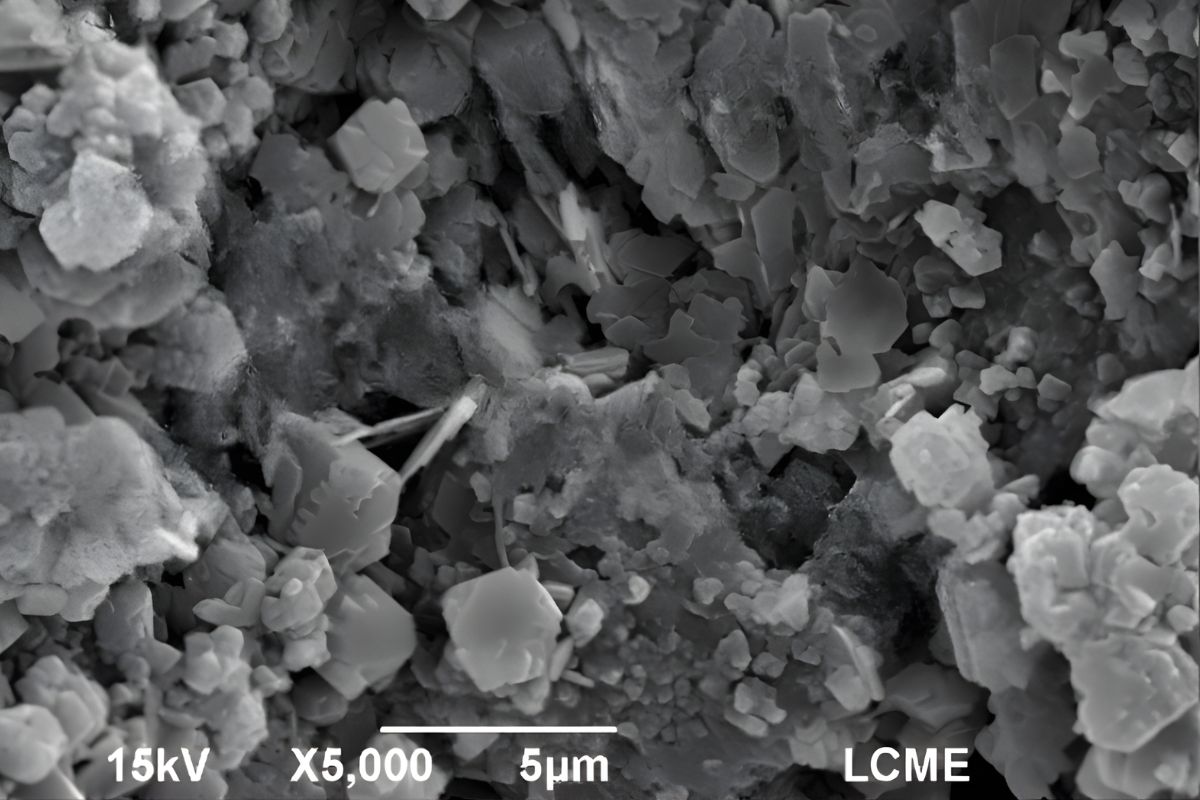
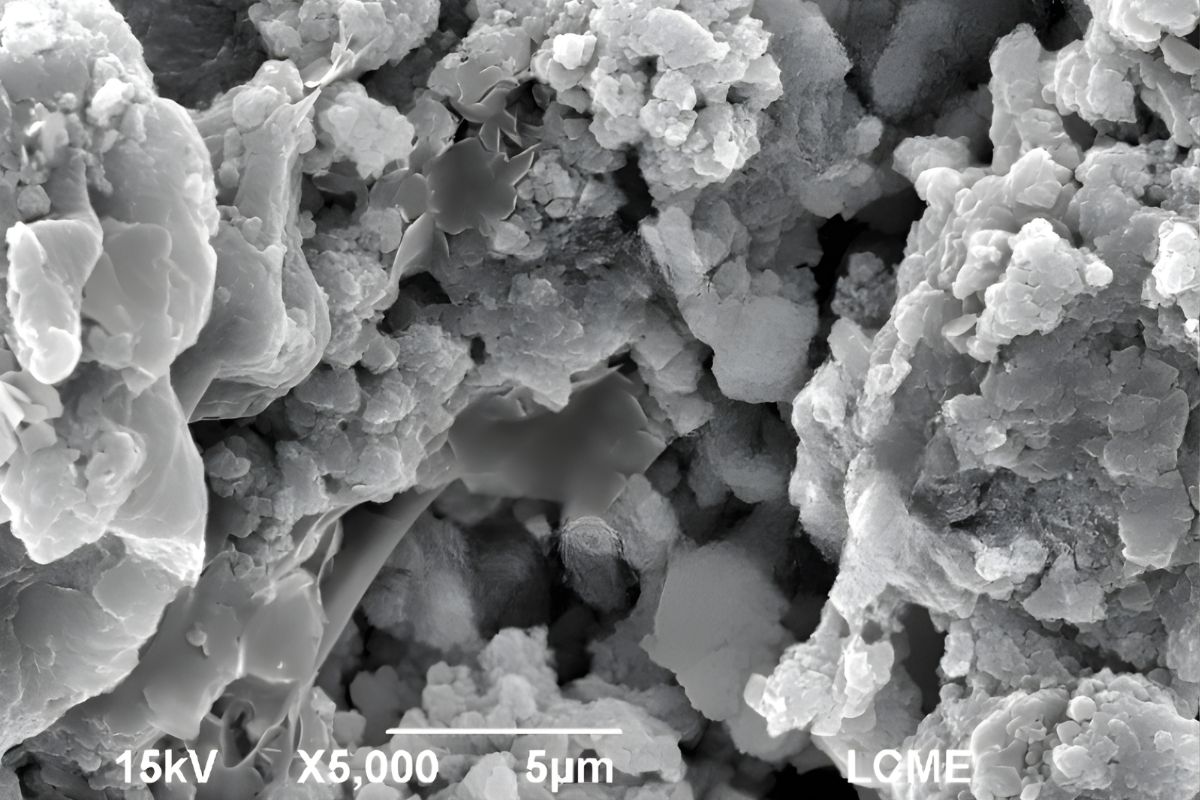
Without graphene (left) | With graphene (right)

Comparison of the microstructure of concrete without graphene (left) and with the addition of graphene oxide (right), obtained by scanning electron microscopy (SEM). A denser, more homogeneous matrix with better distribution of hydration products is observed in the presence of graphene.
Contact us
Through the customer service channel we are available to assist you in the best possible way
- +1 (438) 885-7053
- (48) 3347-5671
- contato@supergrafeno.com.br
- dri@supergrafeno.com.br